
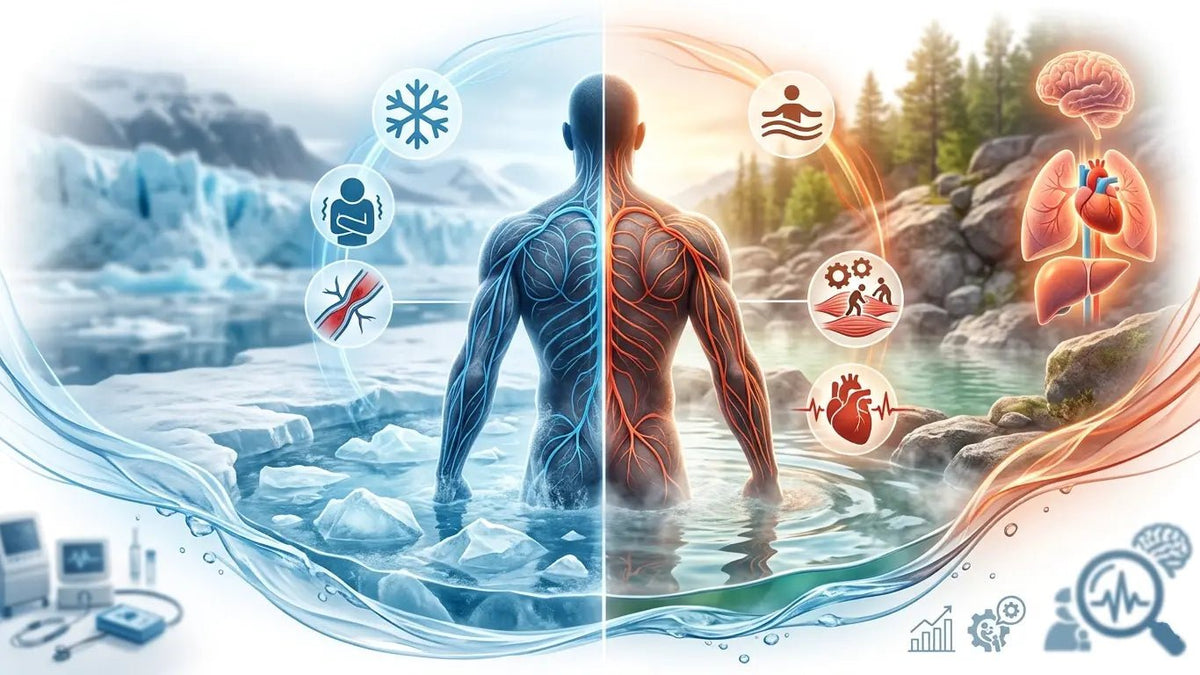
Ice baths can be useful for some specific goals, but the evidence does not support treating them as a universal health intervention. Some research supports reduced post-exercise soreness or better perceived recovery in certain settings. Broader claims about immunity, inflammation, mental health, metabolism, cardiovascular health, sleep, or long-term general health are much less certain. Cold-water immersion also carries real risks.
Where the Evidence Is Strongest
Some of the clearest evidence concerns particular aspects of recovery after strenuous exercise. That is a narrower question than whether regular ice baths make people healthier overall.
Results depend on the outcome measured, the participants, the immersion protocol, and when recovery is assessed. Findings from athletes after exercise should not automatically become health advice for everyone. Cold showers, winter swimming, cold-air exposure, and laboratory cooling are also different exposures, not interchangeable versions of an ice bath.
Exercise Recovery: What Ice Baths Can and Cannot Do
A systematic review and meta-analysis comparing cold-water immersion with passive recovery found benefits for muscle soreness and perceived recovery in some post-exercise settings. These outcomes describe how people feel; they do not establish that every aspect of recovery improves.
- Perceived soreness and DOMS: ratings of discomfort, including delayed-onset muscle soreness after exercise.
- Perceived recovery: how recovered a person feels.
- Strength and performance recovery: the return of measured abilities, such as force production or performance on a specific test.
- Long-term adaptation: changes that develop across repeated training, including muscle growth, or hypertrophy.
Less soreness does not prove that strength has recovered sooner, that all performance measures improve, or that muscle growth will be greater. A result measured after one workout also does not establish the effect of using cold water throughout a training program.
When Ice Baths May Not Be the Best Choice
If maximizing muscle growth is your main training goal, repeated cold-water immersion immediately after resistance training deserves caution. A systematic review and meta-analysis of resistance-training-induced hypertrophy suggests that this practice may attenuate muscle-growth adaptations, although the authors note that the overall quality of the available evidence is limited.
Short-term comfort and long-term adaptation are different goals. The evidence does not justify a universal waiting interval that guarantees the adaptation concern is avoided.
What About Inflammation?
“Reduces inflammation” is too broad to describe the evidence accurately. Soreness, swelling, inflammatory biomarkers, and chronic disease-related inflammation are not the same outcome.
A 2025 systematic review of cold-water immersion and wellbeing found significant increases in measured inflammatory markers immediately after cold-water immersion and one hour later. Results depend on the marker, timing, and study context. This does not support a general claim that ice baths reduce chronic systemic inflammation or treat inflammatory disease.
What About Mood, Immunity, and Other Health Claims?
Some people describe feeling alert or invigorated after cold exposure. That experience is different from evidence that ice baths treat anxiety, depression, or other mental-health conditions.
The same wellbeing review found limited, time-dependent evidence across health outcomes. Immune findings were uncertain, and the mood study it included did not show a significant difference between groups. These findings do not establish reliable long-term mental-health or immune benefits.
One included cold-shower trial reported less sickness absence from work without a significant reduction in reported illness days. Cold showers are not ice baths, and fewer days off work do not demonstrate fewer infections.
Nor should changes in blood flow or energy use be treated as proof of lasting cardiovascular or metabolic improvement. This article does not claim a general sleep benefit or prescribe a time of day for one.
Safety Matters
The American Heart Association notes that sudden cold-water immersion can rapidly increase breathing, heart rate, and blood pressure. An involuntary gasp can be dangerous, especially with the head submerged. A breathing technique does not guarantee protection from cold shock.
Risks are not confined to the first moments in the water. Prolonged exposure can lead to hypothermia, and the risk of hypothermia can continue after leaving the water. Being otherwise healthy does not guarantee safety.
People with cardiovascular conditions or other medical risk factors should consult a qualified healthcare professional before considering cold-water immersion. For more context, see our ice bath risks guide.
No temperature, duration, or frequency makes ice baths universally safe or beneficial. Do not pursue colder or longer exposure simply because a stronger sensation seems like a greater benefit.
FAQ
Are ice baths actually good for you?
They may help with specific outcomes in specific settings, especially some aspects of post-exercise recovery. That does not make them necessary, universally beneficial, or risk-free.
What are ice baths actually proven to help with?
Research supports reduced soreness or better perceived recovery in some exercise settings. “Proven” should not imply that everyone benefits or that all recovery and performance outcomes improve.
Do ice baths reduce inflammation?
Effects on inflammatory markers vary by timing and context. Recovery findings do not establish treatment of chronic inflammation or inflammatory disease.
Do ice baths boost immunity?
Current evidence does not establish ice baths as a reliable way to strengthen immunity or prevent illness.
Are ice baths safe for everyone?
No. Cold shock, cardiovascular strain, and hypothermia are real concerns. Medical history and exposure conditions matter, and apparently good health is not a safety guarantee.
Can ice baths affect muscle growth?
Repeated use immediately after resistance training may attenuate muscle-growth adaptations. The evidence has limitations, but the possible trade-off matters when maximizing hypertrophy is the goal.
Share:
What Can We Gain From Ice Bath?
How Long Should You Stay in an Ice Bath? (It Depends on You)